

Why Do Humpback Whales Come to the Caribbean?
Every year, between January and March, the warm waters of the Dominican Republic become the stage for one of the most extraordinary natural events in the world. Thousands of humpback whales leave the icy seas of the North Atlantic and migrate south to the Caribbean, especially to the Bay of Samaná.
This spectacular migration attracts not only marine biologists and conservationists, but also curious travelers who wish to witness the breathtaking sight of these giants of the ocean.
But why exactly do humpback whales choose the Caribbean as their destination? What biological and environmental reasons explain this incredible journey? In this article, we’ll take a closer look at the natural cycle that brings these majestic animals to the Dominican Republic each year.
The Fascinating Migration of Humpback Whales
Humpback whales (Megaptera novaeangliae) undertake one of the longest migrations in the animal kingdom.
-
Origin: They spend much of the year in the cold waters of Greenland, Iceland, Canada, and New England, which are rich in krill and small fish.
-
Destination: In winter, they travel more than 5,000 kilometers south to the warm Caribbean waters, particularly around the Dominican Republic, Puerto Rico, and the Virgin Islands.
This journey is not random—it is essential to the whales’ survival and reproduction cycle.
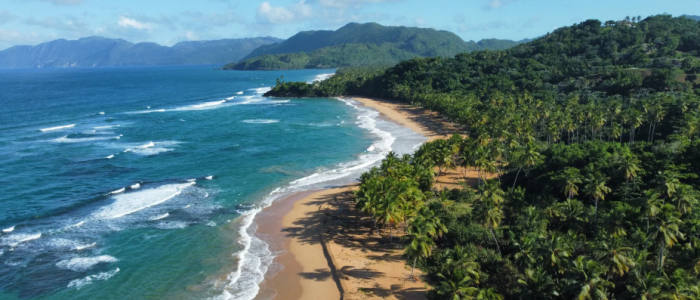
Warm Waters: The Perfect Nursery
The main reason humpback whales migrate to the Caribbean is the temperature of the water.
-
The North Atlantic, though rich in food, is freezing during winter and not suitable for calving.
-
The Dominican Republic offers tropical waters averaging 77–82 °F (25–28 °C), which provide the perfect conditions for birthing and raising newborn calves.
This warmth is crucial because:
-
Newborn whales lack the thick blubber layer adults use for insulation.
-
Calves need mild waters where they can conserve energy and grow strong enough before facing the cold northern seas.
In short, the Caribbean provides the ideal nursery for the next generation of humpbacks.
The Safety of Samaná Bay
Another key factor is protection from predators.
-
Shallow, calm waters like those of Samaná Bay offer natural shelter from sharks and orcas.
-
The geography of the bay creates a safe haven where mothers can nurse their calves and teach them essential survival skills.
In 1986, the Dominican Republic declared the Bay of Samaná a sanctuary for marine mammals, ensuring humpback whales have a protected environment during their seasonal stay. This has made the region one of the best places in the world to observe these gentle giants responsibly.
The Stage for Courtship Rituals
The Caribbean is not only a nursery but also a theater for spectacular courtship rituals.
-
Male humpbacks produce hauntingly beautiful songs that can last up to 20 minutes and are repeated for hours.
-
These songs are thought to play a role in both attracting females and establishing dominance among males.
-
Visitors to the region may also witness breaching, fin slapping, and tail slapping, dramatic displays of strength and communication.
These behaviors are most commonly observed in warm tropical waters, where mating activity peaks.
The Vital Role of Migration in the Whale’s Life Cycle
The migration to the Caribbean is a critical part of the humpback whale’s life cycle.
-
During the summer in northern waters, humpbacks feed heavily on krill and small fish, building up thick layers of fat.
-
In the Caribbean, however, they hardly eat at all. Instead, they rely on their stored energy reserves.
-
Females use this energy to nurse their calves, whose milk is exceptionally rich (around 40% fat), allowing them to grow rapidly.
This cycle—feeding in the north, breeding in the tropics—ensures the survival of the species and demonstrates the importance of protecting both habitats.
Conclusion
Humpback whales come to the Caribbean, and especially the Dominican Republic, to mate, give birth, and raise their calves in warm, safe waters. The tropical climate, the natural shelter of Samaná Bay, and the opportunity for males to display their extraordinary songs and acrobatics all make this region a unique sanctuary.
Witnessing this migration is not just a breathtaking tourist experience—it is also a reminder of the delicate balance of nature and the importance of protecting these ecosystems. The whales’ annual return to the Caribbean is a living testament to the interconnectedness of our oceans.

Who are we?
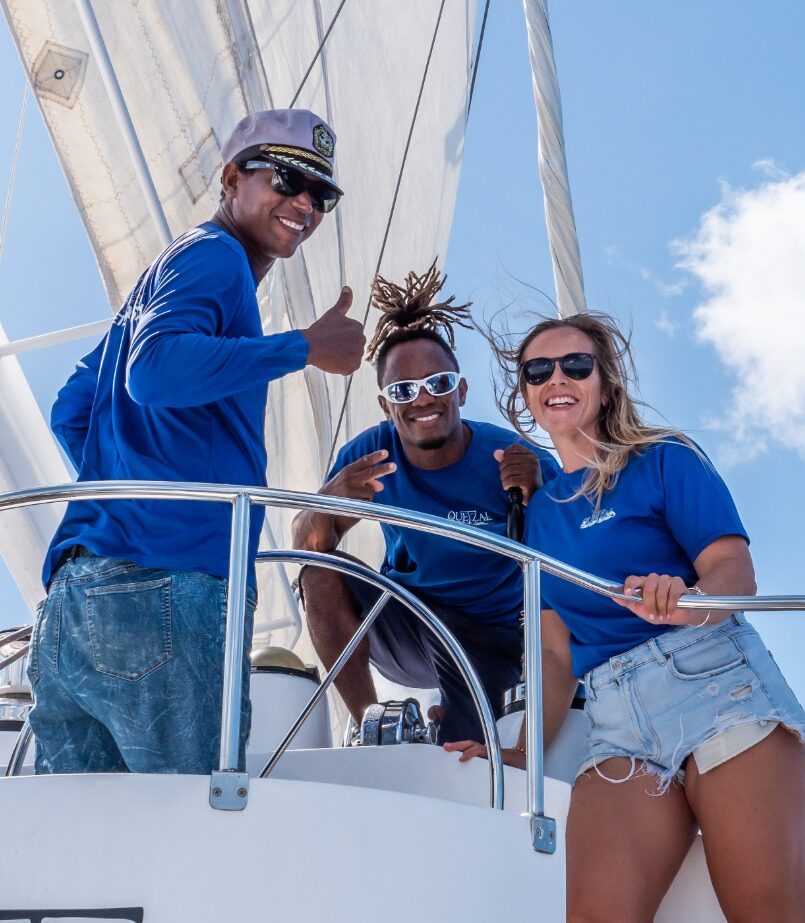
Based in Bayahibe, Quetzal Excursions is a local agency specialized in small-group sea trips to Saona, Catalina, and the most beautiful hidden gems of the Dominican Republic. We focus on comfort, safety, and authenticity, aboard high-end boats with a professional crew.
📱 CONTACT US ON WHATSAPP : +1 (809) 979-7359
Our Regular Excursions
Saona by Catamaran – All Comfort
Whale watching and Redonda Montain excursion
Our Excursion to Catalina Island
Snorkeling Tour to Catalina
Our Private Excursions
Private rental of the Quetzal catamaran
📌 Need help planning your excursion?
Contact Quetzal Excursions to plan your activities from your place of stay, with included transport, small group, professional guide, and high-end services.