

Why is Saona Island Called "Saona"? The Story Behind the Name
Every day, thousands of visitors board a boat toward Saona Island without ever asking where its name actually comes from. It sounds vaguely Italian, and for good reason — but the full story involves a shipwrecked admiral, a friend from northern Italy, an indigenous name that predates Columbus by centuries, and a modern-day push to bring that older name back into use.
Before Columbus: the island of Adamanay
Long before any European set foot on it, the island was known to the Taíno people — the Arawak-speaking indigenous population of the Caribbean — as Adamanay. Some historical accounts interpret the name as meaning something close to “island of refuge,” a fitting description given its position as a sheltered spot just off the southeastern coast of Hispaniola. Under the Taíno, the island wasn’t the uninhabited nature reserve it is today: it supported a real settlement, and by around 1500, its cassava crop was significant enough to help supply the growing colonial city of Santo Domingo.
1494: Columbus, a storm, and a new name
The island’s recorded European history begins in 1494, during Christopher Columbus’s second voyage to the Americas. According to most historical accounts, Columbus and his crew took shelter on the island for roughly a week while riding out a powerful storm — one that some historians consider the first hurricane ever documented by Europeans in the New World.
It was during this voyage that Columbus renamed the island Saona, in honor of his friend and travel companion Michele da Cuneo, who came from the Italian coastal city of Savona, in what is now the Liguria region of northern Italy. Columbus is said to have gone further, naming da Cuneo the island’s first governor. Over the following centuries, “Savona” gradually shifted in local pronunciation and spelling to become “Saona” — the name that has stuck ever since.
That Italian connection hasn’t entirely faded: Saona Island and the city of Savona maintain a symbolic twin-city relationship to this day, and the small power plant that has historically supplied electricity to the island’s one fishing village was reportedly a gift from Savona itself.
A competing theory: an older, unrelated name
Not every historian accepts the Columbus story as the full explanation. Linguists Julian Granberry and Gary Vescelius have proposed an alternative origin, suggesting that “Saona” may actually descend from the Macorix language once spoken in the region, from a root sa-ona meaning roughly “full of bats” — based on a comparison with related terms in the Warao language of the Orinoco Delta in South America. Under this theory, the name wouldn’t be a corruption of “Savona” at all, but an indigenous name that happened to sound similar once filtered through Spanish colonial spelling.
Most historical sources still treat the Columbus/Savona explanation as the more widely accepted one, but the linguistic theory is a reminder that colonial-era naming often layered over — rather than fully replaced — the words already in use on these islands.
The island's darker chapter: Cotubanamá
The story of Saona’s naming can’t really be separated from what happened to the people who lived there before it had a Spanish name. As Spanish colonization intensified, the island’s Taíno population was largely wiped out — through violence, disease and forced labor — and the island was left depopulated for centuries afterward.
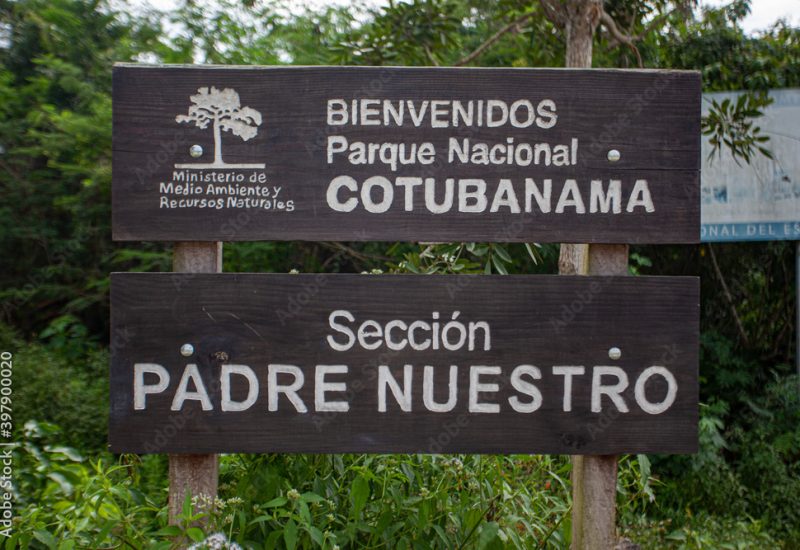
One name tied to this period has taken on new significance in recent years: Cotubanamá, a Taíno cacique (chief) who led resistance against Spanish forces in this region before being captured and executed. His name has since been adopted for the surrounding national park — long known as Parque Nacional del Este (“Eastern National Park”) — which today protects Saona Island, its coral reefs, mangroves and forests, and is increasingly referred to as Cotubanamá National Park in recognition of that history.
Two names, one island
Today, most maps, ticket counters and tour itineraries still use “Saona Island” — or “Isla Saona” in Spanish — as the everyday name. But there’s a visible, ongoing movement among Dominicans to bring the island’s original Taíno name, Adamanay, back into public use, as a way of acknowledging the island’s history before 1494 rather than only after it. It isn’t unusual, on an excursion today, to hear a guide mention both names in the same breath — one European, one indigenous, five centuries apart.
The island itself: what all this history sits on top of
Saona is the largest offshore island in the southeastern Dominican Republic, roughly 42 square kilometers of beach, mangrove, and tropical forest, situated about 19 kilometers off the coast. Two small settlements exist there today — Mano Juan, a fishing village near Flamingo Beach with a handful of modest wooden houses, and a naval detachment at Catuano — but no more than a few hundred people live on the island permanently, a far cry from its pre-Columbian population under the Taíno. The waters surrounding it are shallow enough in places to form natural sandbars, which is exactly what created the island’s well-known “natural pool,” where waist-deep water and large populations of starfish have become one of Saona’s defining features for visitors.
Final Thoughts
Saona’s name turns out to be a small window into a much larger story: an indigenous settlement, a colonial reshuffling of names and power, a shipwrecked admiral’s personal tribute to a friend from home, and a modern reckoning with the history that name has quietly carried ever since. Very few of the beaches visited on a typical day trip come with that much packed into a single word.
For travelers boarding a catamaran toward Saona today — including on trips run by Quetzal Excursions from Bayahibe — the island’s beaches and natural pool are usually the main draw, but the name overhead carries all of this history along for the ride, whether or not it comes up in the guide’s commentary that day.

Who are we?
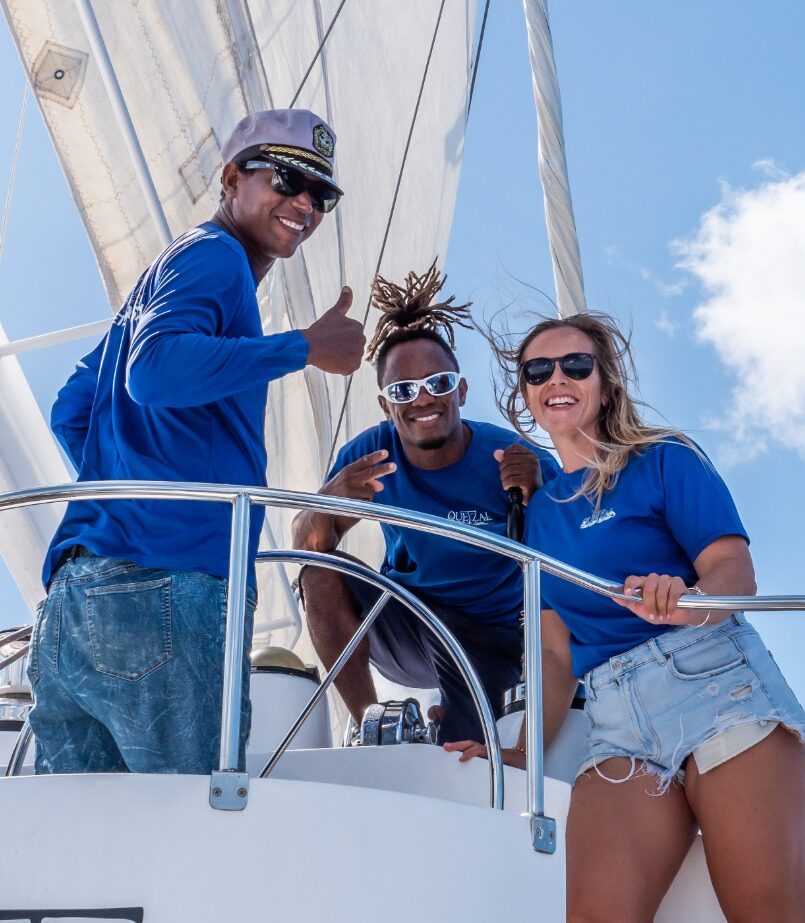
Based in Bayahibe, Quetzal Excursions is a local agency specialized in small-group sea trips to Saona, Catalina, and the most beautiful hidden gems of the Dominican Republic. We focus on comfort, safety, and authenticity, aboard high-end boats with a professional crew.
📱 CONTACT US ON WHATSAPP : +1 (809) 979-7359
Our Regular Excursions
Saona by Catamaran – All Comfort
Our Excursion to Catalina Island
Snorkeling Tour to Catalina
Our Private Excursions
Private rental of the Quetzal catamaran
📌 Need help planning your excursion?
Contact Quetzal Excursions to plan your activities from your place of stay, with included transport, small group, professional guide, and high-end services.