

Is Catalina Island Inhabited?
No — Catalina Island has no permanent residents. It’s a small, protected island off the southeastern coast of the Dominican Republic, visited only as a day trip and with no village, hotel, or year-round population of any kind. That answer alone raises a few natural follow-up questions: why has it stayed uninhabited when so much of the surrounding coastline has been developed, what’s actually on the island if no one lives there, and how does that compare to its better-known neighbor, Saona?
Why Catalina has stayed uninhabited
Catalina Island covers just 9.6 square kilometers, roughly 4.5 km long and 3 km wide, sitting about 2.4 kilometers off the coast near the border of the La Altagracia and La Romana provinces. Its small size, combined with its formal protection as a natural monument and its position within the Cotubanamá (formerly Parque Nacional del Este) protected area, has kept it free of the resorts, roads and permanent construction found along the mainland coast nearby. There’s no natural freshwater source on the island either, which historically made sustained settlement impractical even before conservation rules made it a moot point.
Unlike islands that were once inhabited and later abandoned, Catalina appears to have never supported a permanent settlement in recorded history — its role has always been closer to a waypoint than a home.
What history did happen there
Uninhabited doesn’t mean historically empty. Catalina’s documented history goes back to Christopher Columbus, who is generally credited with naming the island — after Saint Catalina — during one of his later voyages to Hispaniola. Long before either name existed, the surrounding waters would have been part of the same Taíno world that included Saona Island (known to the Taíno as Adamanay) and the wider southeastern coast.
Between roughly 1520 and the 1720s, the island and its surrounding waters served as a hideout for pirates and privateers waiting to ambush Spanish galleons passing through the region — a common role for small, hard-to-approach islands throughout the Caribbean during that period. That history became tangible in 2007, when archaeologists confirmed that a shipwreck resting in shallow water just off Catalina’s coast was the Quedagh Merchant, the lost ship of the notorious pirate Captain William Kidd, executed in 1701. The wreck site is now a protected underwater archaeological area, and it’s one of the reasons Catalina draws serious divers in addition to day-trippers looking for a beach.
What's actually on the island today
With no population, no restaurants and no permanent buildings, a visit to Catalina is built entirely around its natural features rather than any kind of village or town center. The island is recognized as a national monument for its ecosystems, which include sand dunes, mangroves, and coral reef, and it also functions as a bird sanctuary, with a short, easy hiking trail across parts of the island for those interested in birdwatching, ending at a lookout point with a view over the coastline.
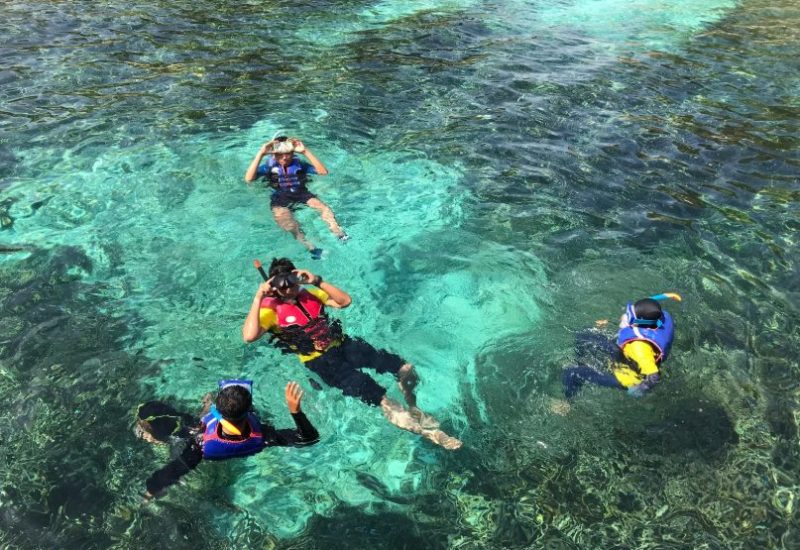
Underwater is where Catalina is best known. Two dive and snorkel sites in particular — commonly called “The Wall” and “The Aquarium” — draw divers from across the region: the former a dramatic drop-off into deeper water, the latter a calmer, shallower area well suited to less experienced snorkelers. Because the island sees a comparatively limited number of daily visitors relative to Saona, its reefs are often described as being in noticeably better condition than more heavily trafficked snorkeling spots nearby.
How Catalina compares to Saona
Catalina is part of a small archipelago that also includes Saona Island and the much smaller Catalinita — and of the three, Saona is the only one that’s actually inhabited. Saona is home to Mano Juan, a small fishing village on its southern coast, along with a naval outpost at Catuano. That distinction is worth knowing before booking an excursion: Saona’s day trips typically include a stop that offers a glimpse of local life in Mano Juan, while a Catalina excursion never will, simply because there’s no village to visit.
This also affects logistics. Because no one lives on Catalina, there’s no public ferry service to the island — the only way to reach it is aboard an organized tour, typically a half-day or full-day boat excursion departing from La Romana or Bayahibe. Everything needed for the day, including food and drinks, comes with the boat rather than being available for purchase once on the island.
What an uninhabited island means for visitors in practice
No lodging
There’s no option to stay overnight on Catalina under any circumstances; every visit is a same-day excursion, generally lasting somewhere between half a day and a full day depending on the operator.
No shops or restaurants on the island
Meals, drinks and any equipment used for the day are brought along by the boat rather than purchased locally, since there’s nothing to buy once ashore.
Limited daily visitor numbers
As a protected natural monument, access to Catalina is more controlled than a typical beach destination, which is part of why its reefs and beaches tend to feel less crowded than more heavily developed spots along the mainland coast.
No cell signal or amenities to rely on
Visitors are effectively off-grid for the duration of the excursion, which is part of the appeal for those looking to get away from resort infrastructure for a day, but worth planning around — sunscreen, water and anything else needed for the day should come along rather than be expected on-site.
Final Thoughts
Catalina Island stays uninhabited for a fairly straightforward combination of reasons: it’s small, it lacks fresh water, and it now sits inside a protected natural monument that prevents the kind of development seen elsewhere along the coast. What that absence of permanent population actually produces, though, is one of the better-preserved natural environments in the region — quieter beaches, healthier reefs, and a documented pirate history that includes a real shipwreck still sitting just offshore.
That distinction from Saona — one island with a village and a naval post, the other with no residents at all — is part of what shapes how operators in the Bayahibe and La Romana area, including Quetzal Excursions, typically present the two destinations: Saona as the fuller day out with a beach village stop included, and Catalina as the quieter, reef-focused excursion built entirely around its underwater scenery rather than anything on land.

Who are we?
Based in Bayahibe, Quetzal Excursions is a local agency specialized in small-group sea trips to Saona, Catalina, and the most beautiful hidden gems of the Dominican Republic. We focus on comfort, safety, and authenticity, aboard high-end boats with a professional crew.
📱 CONTACT US ON WHATSAPP : +1 (809) 979-7359

Our Regular Excursions
Saona by Catamaran – All Comfort
Our Excursion to Catalina Island
Snorkeling Tour to Catalina
Our Private Excursions
Private rental of the Quetzal catamaran
📌 Need help planning your excursion?
Contact Quetzal Excursions to plan your activities from your place of stay, with included transport, small group, professional guide, and high-end services.