

Catamaran or Speedboat to Saona: Which One Should You Choose?
When booking an excursion to Saona Island, two words come up constantly in the descriptions: catamaran and speedboat. Both get you to the same destination, but the crossing, the atmosphere, and even the shape of the day can differ quite a bit depending on which one is chosen. Here’s what actually separates the two options.
The catamaran: stability and group atmosphere
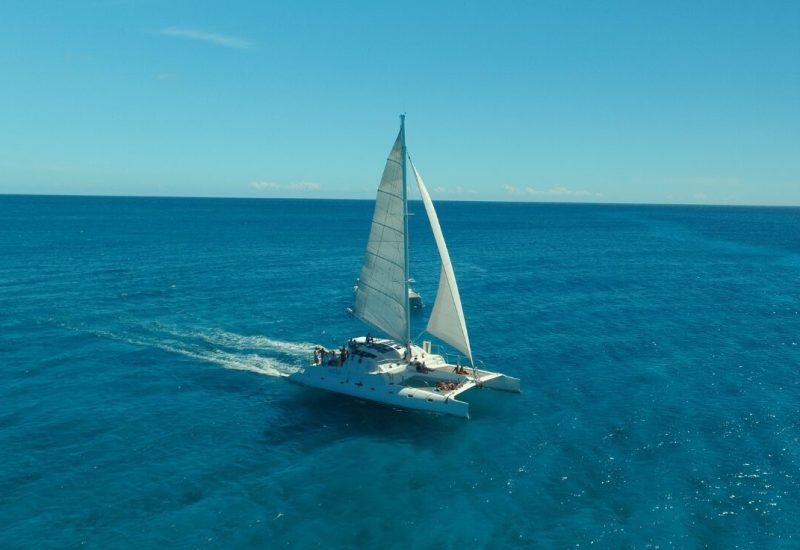
The catamaran is the original and still the most common way to reach Saona. It’s a twin-hulled vessel, which makes it noticeably more stable than a single-hulled boat — a real advantage for passengers prone to seasickness, or traveling with children or older relatives. That stability, combined with a wide, flat deck, also lets the catamaran comfortably carry large groups: shared catamaran excursions commonly run between 60 and over 100 passengers, with open deck space, sun loungers, a bar, and music during the crossing.
The trade-off shows up in travel time and atmosphere. The crossing from Bayahibe to Saona on a catamaran typically takes between 1.5 and 2 hours each way, and the experience on board leans social — open bar, music, group atmosphere rather than a quiet ride. Bathrooms are generally available on board, which isn’t always the case on smaller speedboats. For travelers who want the classic, sociable version of a Saona day out and don’t mind a longer, livelier crossing to get there, this remains the traditional choice.
The speedboat: shorter crossing, more time on the island
The speedboat trades the catamaran’s slow, scenic sail for speed. The crossing to Saona can take as little as 20 to 45 minutes depending on the departure point and the specific boat, which leaves noticeably more time on the island itself for the same total day length. Many operators now combine the two formats — speedboat out, catamaran back, or vice versa — specifically to capture the advantages of both: a fast, exciting crossing in one direction, a more relaxed, music-filled cruise in the other.
Speedboats are less stable than catamarans in rough water, and smaller models sometimes don’t have an onboard bathroom, with stops built into the itinerary instead. They’re generally priced similarly to, or slightly below, catamaran-only excursions, and appeal most to travelers who’d rather maximize swimming and beach time than linger on the boat itself.
Comparing the two formats side by side
| Criteria | Catamaran | Speedboat |
|---|---|---|
| Crossing time | ~1.5 to 2 hours | ~20 to 45 minutes |
| Stability | High (twin hull) | More sensitive to swell |
| Typical capacity | 60 to 100+ passengers | Generally smaller |
| Atmosphere | Social, music, bar | More focused on the thrill of the ride |
| Onboard bathroom | Usually available | Not always |
| Time on the island | Standard | Generally longer |
How to choose between the two
- You want the classic atmosphere and a comfortable ride: the catamaran remains the better fit, especially for groups, families with children, or anyone prone to seasickness.
- You’d rather maximize time on the beach: a speedboat, or a combined speedboat-out/catamaran-back format, cuts crossing time in favor of time on the island.
- You’re traveling with people who have limited mobility or get seasick easily: the catamaran, more stable and generally better equipped, remains the more comfortable option.
- The thrill of speed is part of the experience you’re after: the speedboat offers a more dynamic crossing, appreciated by some travelers independent of the time saved on the island.
FAQ
Is the price different between catamaran and speedboat excursions?
Prices are generally similar, sometimes slightly lower for speedboat-based tours, but the price difference stays secondary compared to the differences in comfort and crossing time.
Can the two be combined in a single excursion?
Yes — it’s an increasingly common format: heading out by speedboat to save time on the island, then returning by catamaran for a more relaxed crossing at the end of the day, or the reverse depending on the operator.
Is a speedboat dangerous in rough seas?
It isn’t dangerous under normal operating conditions, but it’s more sensitive to wave swell than a catamaran, which can make the crossing less comfortable for seasickness-prone passengers on choppier days.
Which format works best with kids?
The catamaran, thanks to its stability and more spacious deck, is generally considered more comfortable for families with young children, particularly over a crossing that can run close to two hours.
Final Thoughts
The difference between a catamaran and a speedboat for reaching Saona goes well beyond speed — it touches stability, passenger capacity, onboard atmosphere, and how much time is actually left on the island once you arrive. The catamaran leans into comfort, stability and a social experience during the crossing itself; the speedboat leans into speed and more time spent on the ground. Neither format is objectively better — the right choice mostly comes down to what each traveler values more for their day at Saona, the journey or the destination.
Operators running Saona excursions from Bayahibe, Quetzal Excursions included, generally rely on the catamaran as the main format for their shared group tours, which reflects that emphasis on comfort and stability rather than a focus on pure speed.

Who are we?
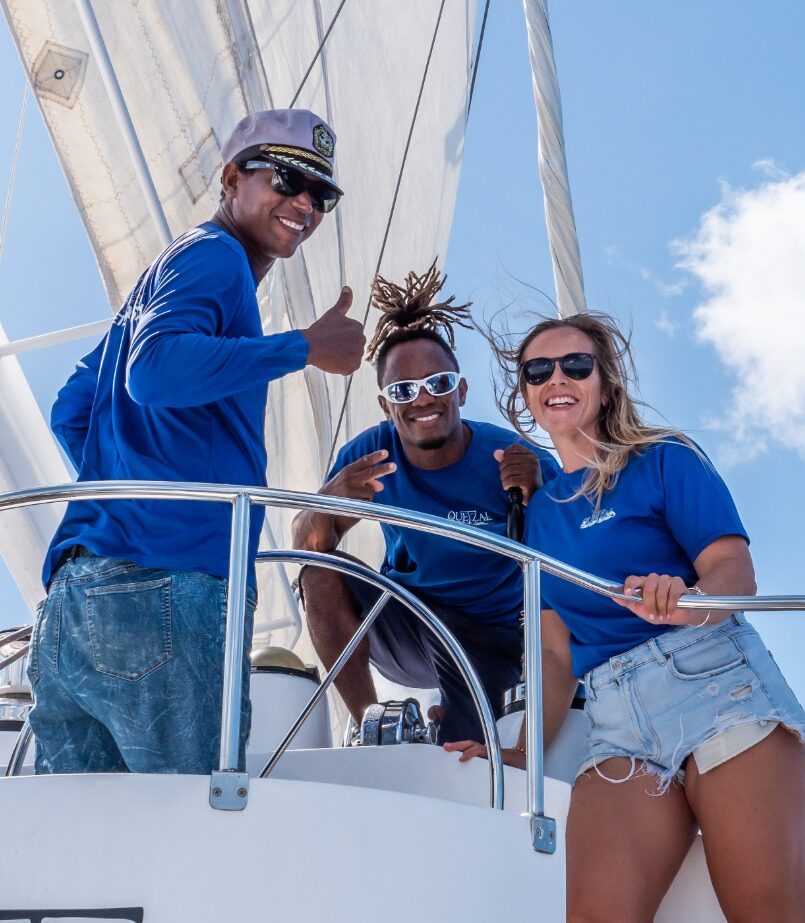
Based in Bayahibe, Quetzal Excursions is a local agency specialized in small-group sea trips to Saona, Catalina, and the most beautiful hidden gems of the Dominican Republic. We focus on comfort, safety, and authenticity, aboard high-end boats with a professional crew.
📱 CONTACT US ON WHATSAPP : +1 (809) 979-7359
Our Regular Excursions
Saona by Catamaran – All Comfort
Our Excursion to Catalina Island
Snorkeling Tour to Catalina
Our Private Excursions
Private rental of the Quetzal catamaran
📌 Need help planning your excursion?
Contact Quetzal Excursions to plan your activities from your place of stay, with included transport, small group, professional guide, and high-end services.