

Is It Worth Visiting Catalina Island?
Catalina Island is one of the most frequently mentioned destinations in the southeast of the Dominican Republic, and also one of the most misunderstood. Some describe it as a snorkeling paradise, others as little more than a beach stop, and many hesitate between it and Saona without knowing which criteria to use. The question “is it worth it?” comes up constantly, and it deserves a detailed answer rather than a simple yes or no.
This guide is designed as a complete reference on the subject. It covers the island’s geography, what you do there, the underwater environment, weather and seasons, the different ways of getting there, how it compares with Saona and other nearby destinations, practical advice, rules for respecting the marine environment, and the most common questions. The aim isn’t to persuade you: it’s to give you enough information to decide for yourself.
Where Is Catalina Island?
Catalina Island lies in the Caribbean Sea, off the coast of La Romana, in the southeast of the Dominican Republic. It belongs to the same stretch of coast as Saona Island, further east, and the Bayahibe shoreline, which serves as the departure point for most excursions in the region.
It can only be reached by sea. There’s no bridge and no regular ferry service: you get there by boat, either on an organised excursion or aboard a private vessel. The main departure ports are:
- Bayahibe, the most widely used departure point, from where the majority of trips to Catalina and Saona leave;
- La Romana and its coastline, notably from certain ports linked to the resorts along the coast;
- Marinas in the area, for private boats and rentals.
Proximity to Bayahibe is a practical advantage: the island is reached after a reasonable sailing time, which leaves room in the day for snorkeling, lunch and swimming rather than for travel alone.
A Small Island Visited in a Day
Catalina is a small island, and that size shapes the whole experience. You can walk around it quickly, there’s no extensive network of trails to explore, and the interest centres on two things: the strip of sand and coastal vegetation, and above all the waters around it.
There’s also no hotel accommodation on the island. It’s visited as a day trip, with a return to the mainland in the late afternoon. That’s why people talk about “an excursion to Catalina” rather than “a stay on Catalina”: the island doesn’t offer what a developed beach destination does, and that choice partly protects it from intensive tourism development.
For anyone expecting to find restaurants, shops or sunbeds for rent at every turn, disappointment is possible. For those who accept a simple place with few facilities, that’s precisely what makes it appealing.
A Marine Environment to Respect
The waters around Catalina are home to coral reefs and a varied marine fauna. This environment is fragile: a trampled coral takes years to recover, and an unsuitable sunscreen, rubbish or repeated collecting, however minor, eventually leave their mark over a tourist season.
That’s why the basic rules are always the same, whichever operator you go with:
- never touch the corals, starfish, rays or turtles;
- don’t stand on the reef, even in shallow water;
- don’t feed the fish;
- don’t take anything from the beach (shells, sand, pieces of coral);
- take your rubbish with you;
- limit the use of polluting sunscreens, favouring mineral formulas or supplementing with UV-protective clothing.
These simple actions make the difference between sustainable visitor numbers and gradual damage. They’re also what guides expect, and they usually repeat these instructions before everyone gets in the water.
What Do You Do on Catalina Island?
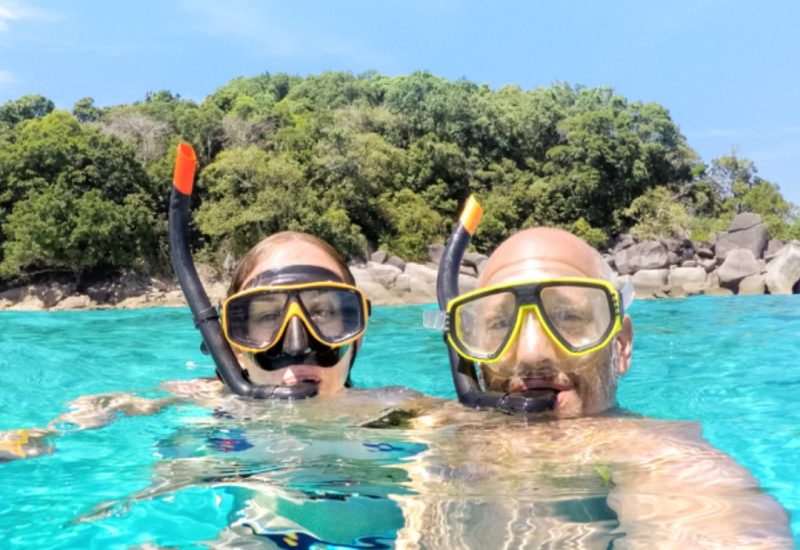
A day at Catalina is built around three main moments: the boat trip, snorkeling and free time on the beach.
Snorkeling: The Main Attraction
This is the reason most travellers choose Catalina. Excursions in the region regularly mention two sites with very different profiles.
The Wall. This is a reef drop-off where the seabed falls sharply to more than twenty metres. When snorkeling, you move along the surface following the wall and observe the marine life clinging to it or swimming alongside. It’s visually more spectacular, but it calls for a certain ease in the water, since you’re above a significant depth.
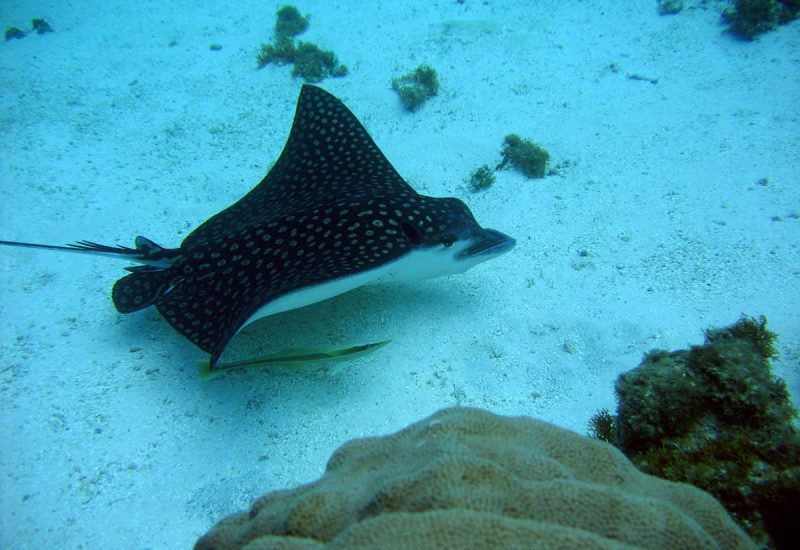
The Aquarium. This is a calmer, shallower area where you frequently come across rays, starfish and, depending on the day, sea turtles. The nickname speaks for itself: it feels like swimming in a large living tank. This spot suits beginners, families and anyone who prefers reassuring depths.
These two sites, often combined in a single day, illustrate the island’s logic well: offering both a more adventurous and a gentler experience, depending on each person’s level.
Guided snorkeling sessions generally last between thirty and forty minutes per stop. A guide trained in the activity accompanies the group in the water, points out features of interest and watches over safety, which is particularly helpful for those unused to a mask and snorkel.
The Beach and Swimming
The island has a beach of pale sand, lined with vegetation and palm trees, with shallow water near the shore. Free time, usually after lunch, lets you swim, rest in the shade or keep exploring underwater on your own.
It isn’t a landscaped resort-style beach: few facilities, no major commercial offering, and a more natural feel than many other tourist beaches in the region.
Sailing and the Coastline
The journey is part of the experience, especially aboard a catamaran or sailboat. The return trip often runs along the La Romana coastline, which gives a view from the sea of large developments like Casa de Campo, and some excursions stop at the mouth of the Chavón River, a site known in the region for its scenery and for having served as a film location.
What Does a Typical Day Look Like?
Although each excursion has its own organisation, a day at Catalina generally follows the same logic:
- Morning: boarding at the departure port, often after a transfer from your hotel. Safety briefing and an overview of the day.
- Sailing to the island: time to enjoy the sea, the deck and the view of the coast.
- First snorkeling stop: most often at a drop-off site.
- Second snorkeling stop: a calmer site, with wildlife that’s easier to observe.
- Lunch: on board or on the island, depending on the package chosen.
- Free time: swimming, beach, rest or another snorkeling session.
- Return: sailing along the coast, possibly with an additional stop, then disembarkation at the port and return to the hotel.
The total duration is generally around a full day, depending on departure times and sea conditions.
When Should You Visit Catalina Island?
The Best Time of Year
The dry season, from about December to April, is generally the most stable: clear skies, rarer rain, calmer seas on average and pleasant temperatures. It’s also when tourist numbers are highest in the Dominican Republic, which can affect how quiet the sites feel.
The Wet Season
From May to November, rain is more frequent, often in brief, localised showers. They don’t always prevent trips from going ahead, but the sea can be rougher on some days.
Hurricane Season
The hurricane season, officially running from June to November and generally peaking from late August to October, can lead to cancellations or reschedules when sea conditions don’t allow safe navigation. In bad weather, a reliable operator will cancel or postpone the excursion and offer an alternative or a refund. It’s best to find out in advance what policy applies.
The Time of Day
The sea is often calmer in the morning, and the early hours of the day generally offer better underwater light. In the afternoon the wind can pick up, which is why many excursions are arranged to spend most of the time in the water before late morning and head back in mid-afternoon.
Crowds
How quiet the island feels varies with the season, the day of the week and the number of boats present. Cruise ships also sometimes call in the area, which can increase the crowds on certain days. Choosing a small-group format or an early departure usually helps limit the feeling of a crowd.
Catalina or Saona: Which Should You Choose?
The comparison is unavoidable, because the two islands are close and often offered by the same operators. They meet different expectations, though.
| Catalina | Saona | |
|---|---|---|
| Size | Small island, quick to explore | Large island, far more extensive |
| Main interest | Snorkeling and reefs | Beaches, natural pool, preserved nature |
| Atmosphere | Calm, more intimate | Busier, more varied |
| Type of day | Centred on the sea | Mixing sea, beach and island discovery |
| Facilities | Very limited | Variable depending on the area |
| Ideal for | Snorkeling fans, days at a relaxed pace | Travellers looking for varied scenery and large beaches |
In short:
- For the water and snorkeling, Catalina is often preferred.
- For variety of landscapes, long beaches and the natural pool, Saona is a better match.
- For a stay of several days, doing both on two separate days is the most complete solution. Some combined packages let you pair the two islands within a single stay.
How to Get to Catalina
Several options exist, each with different advantages.
The Group Catamaran Excursion
This is the most common format. Transport, snorkeling stops, meal and free time are included in an organised day. A catamaran generally offers more comfort than a small motorboat: shaded areas, a rest area, toilets and a more stable ride.
Renting a Private Boat or Yacht
This option lets you customise the itinerary, timings and stops for a small group. It suits families, groups of friends or anyone wanting a freer pace. It’s generally more expensive than a group excursion, but more flexible.
Combined Packages
Some operators offer to pair Catalina with Saona, or with other activities (land tours, for example), in multi-day or multi-stage packages. These combinations let you make the most of a short stay without multiplying the arrangements.
Transfers From Your Accommodation
Departure is most often from Bayahibe. For travellers staying elsewhere, a road transfer is needed:
- Bayahibe and Dominicus: generally the simplest, with a short trip;
- La Romana and Boca Chica: a drive of a few dozen minutes;
- Punta Cana: a longer transfer, around one to two hours depending on traffic;
- Santo Domingo: a transfer of about two hours.
These travel times need to be factored into the day: leaving from Punta Cana or Santo Domingo means an early start and a later return.
What Should You Bring?
A day at sea requires a minimum of preparation:
- Swimsuit and towel;
- Sunscreen (ideally mineral, or low-impact on corals) and sunglasses;
- Light clothing, and a UV-protective shirt for long snorkeling sessions;
- Flip-flops or sandals that are easy to take off;
- A light layer for the crossing, as the wind can feel cool at sea;
- Personal snorkeling gear if you like (equipment is often provided, but it isn’t always available for very young children);
- A waterproof bag or pouch for your phone and documents;
- Water and a cap, even though drinks are generally provided on board.
Sun exposure in the Caribbean is strong, even when the sky is overcast. Water reflects the rays, and people tend to underestimate how long they’ve spent outdoors.
Advice by Traveller Profile
For Families With Children
Catalina can suit children who are comfortable in the water, with a life jacket and an adult present. It’s best to ask in advance about the minimum age, the equipment available for younger children and the safety rules. Very young children don’t always have suitable equipment available: it’s better to bring your own.
For Beginner Snorkelers
No particular level is generally required, but it’s important to feel at ease in the water. A guide in the water, available life jackets and gradual stops are very reassuring. It’s best to mention your level at the start of the day.
For People Prone to Seasickness
Choose a catamaran, which is more stable, take a morning departure and avoid a heavy meal before boarding. Seasickness remedies should be taken before departure, not once at sea.
For People With Reduced Mobility
Getting on and off the boat, as well as access to the beach, can be difficult. This should be discussed with the operator before booking, to find out whether the trip is suitable.
For Couples and Travellers Seeking Calm
An early departure, a small group or a private boat let you enjoy the island with more peace and quiet.
For Photographers
The best light conditions are generally found in late morning, when the sun is high and the water reveals its colours. A waterproof camera or a waterproof pouch is a real plus for snorkeling.
Common Misconceptions About Catalina Island
“It’s a desert island.” Not quite: with no accommodation but visited by several boats each day, it doesn’t have the character of an isolated island.
“There are plenty of restaurants and bars.” No: the island remains very undeveloped.
“You’re sure to see turtles.” Sightings depend on the day and the conditions. Marine wildlife is wild, and no reputable operator can guarantee the presence of a particular species.
“It’s the same as Saona.” The two islands are close, but the experience is different: Catalina centres on the sea, Saona on a combination of beaches, scenery and nature.
“You have to know how to scuba dive.” No: snorkeling doesn’t require certification. You just need to be comfortable in the water.
What Quetzal Excursions Offers at Catalina
Quetzal Excursions runs a day excursion to Catalina from Bayahibe aboard the Quetzal, a sailing catamaran. According to the official trip description, the day includes two guided snorkeling stops, at the Wall and the Aquarium, lunch on board, free time for swimming or the beach, and a return along the La Romana coast with a stop at the mouth of the Chavón River.
A French-speaking guide trained in snorkeling accompanies participants in the water, and commentary is provided on board. The atmosphere stays relaxed: the boat isn’t designed as a party boat, which sets it apart from some other trips in the area. The outings are aimed at small groups, and the catamaran can be privatised on request. A hotel transfer is included for the Bayahibe and Dominicus area, with options for other regions.
Prices, schedules and availability change with the season, so it’s best to check them directly on the excursion page or with the agency.
FAQ
How long should you allow to visit Catalina?
A full day is the baseline, especially once the transfer from your hotel is included.
Do you need to be able to swim?
Yes: snorkeling and swimming assume you’re comfortable in the water. A life jacket is generally provided, but it doesn’t replace knowing how to move in the water.
Is snorkeling equipment provided?
Most often yes, with mask, snorkel, fins and life jacket. It’s best to check availability for very young children.
Are there services on the island?
Very few. You need to rely on what the boat or excursion provides (meals, drinks, toilets).
Can you stay overnight?
No: the island is visited as a day trip.
What happens in bad weather?
Excursions can be postponed or cancelled for safety reasons. The refund or rescheduling policy varies by operator.
Do you need to book in advance?
It’s recommended, especially in high season or for small-group trips, where places are limited.
Is Catalina suitable for children?
Yes, for those who are comfortable in the water and accompanied by an adult, with suitable equipment.
Can you combine Catalina and Saona?
Yes, either on two separate days or through combined packages offered by some operators.
Is it really different from Saona?
Yes: Catalina centres on the sea and snorkeling, while Saona offers a more varied experience, with large beaches and a natural pool.
Final Thoughts
Visiting Catalina Island is worth it for those who like the water, snorkeling and days at a calm pace, and less so for those expecting facilities, entertainment or a wide variety of scenery. Its main strength lies in its underwater world and its character as a small, relatively unspoilt island, not in a developed tourist offering. The right decision therefore depends less on the place’s reputation than on your own expectations: knowing in advance what you want to experience at sea avoids most disappointments.
For longer stays, pairing Catalina with Saona on two separate days shows two complementary sides of this coast. In every case, a few simple precautions (checking the weather, choosing a suitable format, respecting the marine environment) are enough to make the most of the day.

Who are we?
Based in Bayahibe, Quetzal Excursions is a local agency specialized in small-group sea trips to Saona, Catalina, and the most beautiful hidden gems of the Dominican Republic. We focus on comfort, safety, and authenticity, aboard high-end boats with a professional crew.
📱 CONTACT US ON WHATSAPP : +1 (809) 979-7359

Our Regular Excursions
Saona by Catamaran – All Comfort
Our Excursion to Catalina Island
Snorkeling Tour to Catalina
Our Private Excursions
Private rental of the Quetzal catamaran
📌 Need help planning your excursion?
Contact Quetzal Excursions to plan your activities from your place of stay, with included transport, small group, professional guide, and high-end services.