

Is the buggy suitable for people with back pain?
Buggy tours and back pain: is it really compatible?
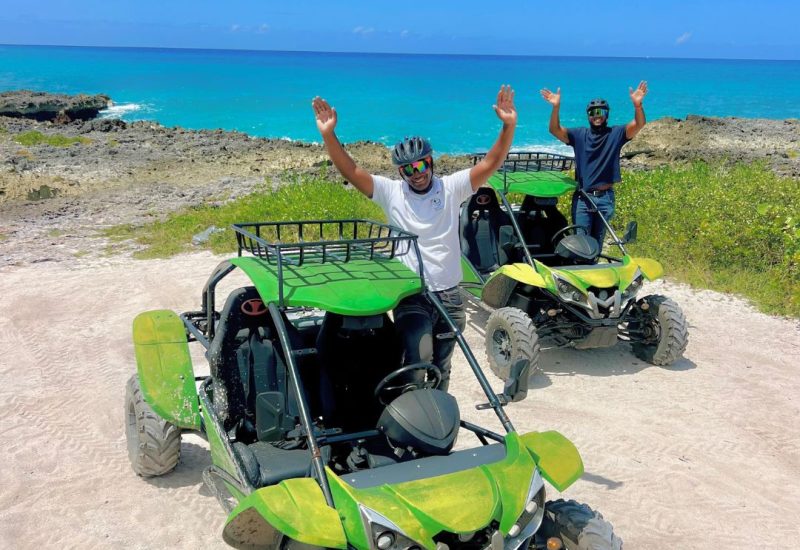
Buggy excursions look like a fun, easy way to see the countryside. For someone with a sensitive back, the picture is less clear. A buggy is an off-road vehicle, and the ride is built around dirt tracks, uneven ground and a firm, upright seating position. Whether that is compatible with back pain depends on the person, the condition and the conditions on the day.
This article explains what happens to your back during a buggy ride, which factors make it more or less comfortable, and which questions to ask before you commit. It also looks at calmer alternatives for travelers who would rather protect their back and still enjoy the region. It is general information, not medical advice. Anyone with an ongoing back problem should check with their doctor first.
Searches for “buggy back pain” usually come from people who already want to do the activity and are looking for an honest answer. The short version: for some people it is manageable, for others it is a poor idea, and the difference is rarely obvious from the outside.
What a buggy ride actually does to your body
Buggies are usually driven on unpaved roads, farm tracks and sandy or rocky paths. Even at moderate speed, the vehicle reacts to every bump, rut and puddle. Suspension helps, but it is built for durability and handling rather than the cushioning of a road car.
Three things tend to matter for the back:
- Vertical shocks. Bumps travel through the seat into the spine. Repeated small impacts can be more tiring than a few big ones.
- Vibration. Long exposure to engine and track vibration can aggravate muscle tension in the lower back.
- Posture. You sit fairly upright, strapped in, often bracing yourself with your feet and hands. That static, slightly tense position can irritate muscles over an hour or more.
On top of this, you usually wear a helmet. It is not heavy, but it adds weight on the neck, which can matter if the pain extends to the cervical area.
Why “back pain” is too vague a category
People use the phrase to describe very different situations. Mild stiffness after a desk job is not the same as a herniated disc, a recent injury, chronic sciatica or a back that has been operated on. A ride that is fine for the first may be a bad idea for the others.
Some general distinctions are worth keeping in mind:
- Occasional or mild discomfort often reacts to prolonged static positions and moderate vibration, but may cope well with a gentle ride and regular breaks.
- Chronic pain that flares with jolts or twisting needs more caution, and a conversation with a doctor beforehand.
- Acute pain, recent injury or surgery is generally a reason to avoid shock-heavy activities until a professional says otherwise.
- Pain linked to pregnancy raises separate concerns, and many operators restrict pregnant travelers from vehicles like these.
Because of this range, no single “yes” or “no” is honest. The useful question is not whether buggies are suitable for back pain in general, but whether this ride, on this terrain, suits your back today.
The factors that change the comfort level
Two buggy excursions can feel completely different. Several variables decide how rough the experience is.
Terrain. Smooth gravel roads and packed earth are far kinder than rocky tracks with potholes. Wet weather can turn a manageable path into a rutted one.
Speed. Speed is the biggest multiplier. A slow pace lets the suspension absorb bumps. A faster pace turns the same bump into a hard jolt. In a group ride, you often follow the pace of the group.
Duration. An hour is not the same as three. Fatigue builds, muscles tire, and the last part of a long ride is where discomfort often appears.
Seat position. Passenger and driver seats do not feel the same. The driver is busy steering, braking and anticipating bumps, while the passenger can sometimes brace more naturally. The driver, however, controls speed and can choose to slow down.
Breaks. Planned stops to get out, stand and stretch make a real difference over a longer outing.
Your own preparation. How you slept, whether you are already sore, and whether you warmed up are all part of the picture.
Driver or passenger: which is easier on the back?
This is a common question, and the answer is not universal. As a passenger, you do not have to manage the steering wheel or pedals, which reduces the tension in your arms and shoulders. You can also focus on bracing and posture. On the other hand, you cannot decide when to slow down.
As a driver, you control the pace and can take bumps more gently, but you grip, steer and concentrate for the whole ride. If your pain is triggered by static tension or by twisting, driving may be more tiring than it looks.
If you have back pain, many travelers find the passenger seat a reasonable starting point with a calm driver. Whichever seat you take, it is worth telling the driver or guide in advance that your back is sensitive, so they can adapt the pace where possible.
Practical ways to reduce the strain
For someone whose back is not in a serious condition, a few habits can make the ride more comfortable. None of these removes the risk entirely, and none replaces medical advice.
- Sit all the way back in the seat, with your back supported, and keep your spine neutral rather than slumped.
- Keep your knees slightly flexed and your feet braced so your legs absorb part of the shock.
- Hold the handles or wheel firmly but without clenching; tense shoulders send tension down the spine.
- Ask the guide to keep a moderate pace on rough sections, and slow down over visible holes.
- Take any breaks offered, get out of the vehicle, and walk or stretch gently.
- Avoid twisting your torso sharply to look behind you; turn your whole body instead.
- Take pain medication only as your doctor has advised, and do not use it to mask an acute problem.
If pain increases during the ride, say so and stop. Pushing through is exactly what turns a mild problem into a bad week.
When it is better to skip the buggy
Some situations are a clear signal to choose another activity. These include a recent back injury or surgery, a diagnosed condition where your doctor has warned against impacts and vibration, acute pain at the time of the trip, and pregnancy. Neck pain or a history of spinal problems also deserves careful thought, given the combination of jolts and a helmet.
There is also a less obvious case: when the only reason to do it is group pressure. A buggy ride is not a milestone of a Dominican holiday. If you suspect it will hurt, there are other ways to see the same landscapes.
Gentler alternatives for a sensitive back
The region offers plenty of activities that involve less shock. Which ones suit you still depends on your condition, but the following are generally lower-impact.
Sailing and boat trips. A sailing catamaran moves with the water rather than slamming over it. In general, twin-hull sailing boats tend to feel steadier than small speedboats, because speedboats can hit waves at speed and transmit jolts to the body. Even so, sea conditions vary, and a calm day is not guaranteed.
Walking and light sightseeing. Cave visits, short nature walks and village strolls let you control your own pace, with no vibration at all.
Cultural visits. Heritage sites and historic towns can be explored at a relaxed pace, with plenty of places to sit.
Beach time. A day on a quiet beach, with a proper sunbed, is often the best medicine for stiff muscles.
Swimming and snorkeling. Floating in water takes the load off the spine, which many people with back discomfort find soothing. Entering and leaving the water, and getting in and out of a boat, still need care.
If you really want the buggy experience, a shorter ride at a calm pace is a more reasonable option than a long, fast one.
A note on boat excursions and back pain
Because boat trips are the most common alternative, it is worth being precise. Not all boats are equal. Fast, small boats can be rough in choppy water, and operators often warn travelers with back problems for exactly that reason. A calmer, larger vessel is usually easier, but sea conditions, the seating you choose and the time spent sitting still all count.
If you plan a boat excursion with a sensitive back, ask what kind of boat it is, how long the trip lasts, where you can sit, whether there are cushioned areas, and whether the operator advises against it for people with back problems. Honest operators will tell you.
Questions worth asking before you book
Whatever activity you choose, a short list of questions makes the decision easier and shows you what the operator knows.
- How long is the ride, and how much of it is on rough terrain?
- What is the pace, and can the group slow down on request?
- Which seat position is recommended for someone with back pain?
- Are there breaks, and how long are they?
- Does the operator advise against the activity for people with back issues?
- What happens if I want to stop partway through?
- What are the age, health and licence requirements?
If a company cannot answer these clearly, that tells you something too.
What Quetzal Excursions says about buggy and boat excursions
Quetzal Excursions’ official pages describe two buggy outings. The Buggy Bayahibe Aventure lasts roughly three hours, is open to participants from age 6, requires a valid driving licence, provides helmet, bandana and goggles, and includes a swim at Cueva Chicho. The Buggy & Quad Sunset starts with a briefing at a ranch, continues by buggy and then by quad, includes a crossing of the Chavón River by barge, and takes a maximum of 22 people. The pages do not describe the condition of the tracks, the pace, or any specific policy for travelers with back pain, so it is worth contacting the team directly before booking if your back is a concern. The licence requirement is also presented differently from one page to another, so confirm it too.
On the water side, the official page for the Saona speedboat excursion states that it is not recommended for people with back problems, pregnant women or those who are physically fragile. The Saona sailing catamaran excursion lasts about eight hours and departs from the port of Bayahibe, with snorkeling at Catuano, time at a Saona beach and lunch on board. The pages do not make any medical claim about the catamaran, so the same advice applies: ask before you book if your back is sensitive.
Final Thoughts
A buggy excursion is not automatically off limits for someone with back pain, but it is not a neutral activity either. Vibration, jolts and a fixed upright posture are all part of the ride, and the effect depends on the person, the terrain, the speed and the duration. Mild, occasional discomfort may be manageable with a calm pace, a good seating position and regular breaks. Chronic, acute or post-surgical problems call for a doctor’s opinion first, and sometimes for a different plan.
The best approach is to be honest about your condition, ask specific questions, and treat any guidance from an operator as general information rather than a medical judgment. If the answers are not reassuring, there are lower-impact ways to enjoy the area, from a sailing trip to a day of swimming and relaxing, that let you come home with good memories and a back that feels no worse.

Who are we?
Based in Bayahibe, Quetzal Excursions is a local agency specialized in small-group sea trips to Saona, Catalina, and the most beautiful hidden gems of the Dominican Republic. We focus on comfort, safety, and authenticity, aboard high-end boats with a professional crew.
📱 CONTACT US ON WHATSAPP : +1 (809) 979-7359

Our Regular Excursions
Saona by Catamaran – All Comfort
Our Excursion to Catalina Island
Snorkeling Tour to Catalina
Our Private Excursions
Private rental of the Quetzal catamaran
📌 Need help planning your excursion?
Contact Quetzal Excursions to plan your activities from your place of stay, with included transport, small group, professional guide, and high-end services.