

Where does the name “Catalina Aquarium” come from?
Anyone planning a day trip to Catalina Island will come across the name “Catalina Aquarium” sooner or later. It appears in excursion descriptions, travel forums and photo captions, usually with a promise of clear water and plenty of fish. It is a catchy name, and it raises an obvious question: why would a stretch of open sea be called an aquarium, and is the name more than a label for visitors?
This article looks at what the nickname means, why it suits the spot, what you can realistically expect to see there, and how to visit it without harming the reef. It also explains where the nickname fits among the other snorkeling sites around the island, and what Quetzal Excursions says about its stops at Catalina.
What “aquarium” means to snorkelers
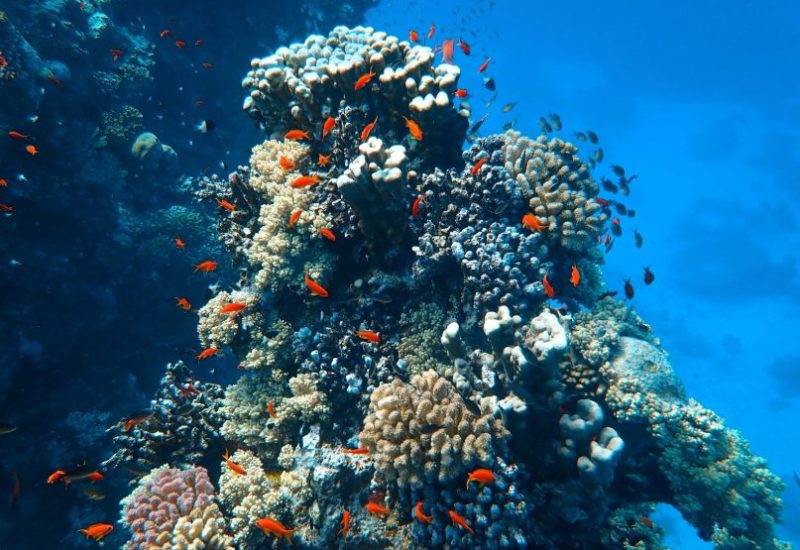
Around the world, “aquarium” is one of the most common nicknames for a snorkeling or diving site, and it follows a simple pattern. It describes a place where the water is calm and shallow, the visibility is good and the marine life is concentrated in a small area, so that you can float on the surface and watch it much as you would watch a large tank. You do not need to chase anything or dive deep: the fish, rays and starfish are simply there, in plain view.
That is the image the name conveys at Catalina. The idea is not that the animals are kept there, but that the setting makes watching them unusually easy. For a beginner, a family or anyone who prefers to keep the sea floor within sight, this matters far more than any technical detail about the reef.
The name’s origin: what can and cannot be said
Many readers hope for a precise story, such as a specific person, a date or a first expedition. Honestly, the exact origin of the name “Catalina Aquarium” is hard to pin down. Informal names like this one tend to emerge by word of mouth among local guides, boat crews, divers and visitors long before they appear in print, and they are rarely tied to an official record. In that sense, the name looks like a descriptive nickname that stuck because it said exactly what people saw.
This also explains why the same name turns up at other places. Snorkeling and diving spots are usually named after what they look like, what lives there or what a guide once saw, rather than through any formal process. “Aquarium” is a label that describes an experience, and it survives because it is accurate, not because it was invented by a marketing department.
Catalina Aquarium: where does this nickname come from, and why does it still fit?
Whatever its origin, the name has lasted because the spot still delivers what it promises. A few features explain why:
- Shallow water. The area is described as not very deep, which keeps the sea floor and the animals close to the surface.
- Calm conditions. Sheltered areas like this are easier for beginners, children and anyone who is not a confident swimmer.
- Concentrated life. Reef spots tend to attract fish, rays and other animals in a small space, which creates the “tank” effect.
- Good visibility. On a clear day, the water lets you see details of the sea floor and the animals moving over it.
The result is a place where you can spend a long time floating and watching, without effort or special skills, and that is precisely what the word “aquarium” suggests.
What you can expect to see
The marine life at a spot like this is typical of a Caribbean coastal reef, though what you see on a given day always varies. According to the official presentation of Quetzal Excursions’ Catalina outing, the Aquarium is known for its reef life, with rays and starfish, and sometimes sea turtles. Alongside them, you can generally expect a range of small and medium reef fish in the shallows.
A few points are worth keeping in mind:
- Sightings are never guaranteed. These are wild animals in open water, not exhibits, and what appears on a given day depends on the weather, the tide and the time of day.
- Turtles are an occasional bonus, not a certainty.
- Rays and starfish are best watched, not handled. Touching them can stress the animals and damage their protective coating.
- Conditions change. Visibility can drop with wind, swell or recent rain.
Going in with realistic expectations tends to make the experience better: the Aquarium is a gentle, easy place to watch marine life, not a promise of a particular animal.
How the Aquarium differs from the Wall
Catalina is best known for two very different snorkeling sites, and understanding the contrast helps explain why the Aquarium has its name. The Wall is a reef drop-off where the sea floor falls away to more than twenty meters. You swim along the edge and look down into deeper blue water, which makes for a more dramatic but less reassuring setting. The Aquarium, on the other hand, is shallow, calmer and closer to the bottom.
Seen together, the two names reflect the character of each spot. One is named for a structure, the other for an impression. This is also why many first-time visitors find the Aquarium the easier of the two: the depth is modest, the animals are close and there is little to fear. The Wall, meanwhile, suits people who are already comfortable above deep water.
Why snorkeling names are rarely official
It helps to understand how snorkeling sites usually get their names. Unlike roads or villages, reef spots are almost never named by a municipal authority. Instead, they accumulate labels from the people who use them: dive guides who need a simple way to refer to a place, captains who return to the same spot every day, and visitors who then repeat the name to friends and online. A name that is easy to remember and says something about the site survives; one that is vague or confusing disappears.
Because of this, you may see slightly different names for the same place from one operator to another, and the same name used for different places in different countries. That is normal. When you read about “Catalina Aquarium,” it is worth treating the name as a practical description of a kind of spot, rather than as an official designation with a documented history.
What affects the experience from one day to the next
Even at a reliable spot, no two visits are alike. The same reef can feel quite different depending on several factors:
- The time of day. Morning light often gives the clearest view, while strong midday sun can improve color but also bring more crowds.
- The sea state. A calm day makes for easy floating; wind and chop reduce visibility and comfort.
- The number of visitors. A busy day means more people in the water and less room to drift quietly.
- The season. Rain and swell vary through the year, and both influence how clear the water is.
A good guide will take these into account, and it is reasonable to ask in advance how conditions have been recently. Keeping expectations flexible is the simplest way to avoid disappointment.
Visiting the Aquarium responsibly
The reason the area remains attractive is that the reef is still healthy, and a few habits help keep it that way:
- Do not touch or stand on the coral, even if the water is shallow.
- Do not touch, chase or feed the animals. Feeding changes their behavior and can make them dependent on visitors.
- Keep a respectful distance from rays and turtles, and never block their path.
- Use sun protection that is kinder to reefs, or cover up with a UV-protective shirt.
- Keep your fins under control. Kicking up sand or hitting the reef damages it.
- Take everything back with you, including packaging and bottles.
These are small things, but multiplied by the number of people who visit each day, they make a real difference.
What Quetzal Excursions offers at Catalina
Quetzal Excursions runs a full-day excursion to Catalina from Bayahibe aboard the Quetzal, a sailing catamaran. According to the official presentation, the outing includes two guided snorkeling stops: the Wall, described as an underwater cliff dropping to more than twenty meters, and the Aquarium, known for its reef life with rays, starfish and sometimes turtles. Each guided session lasts about thirty to forty minutes.
A guide trained in snorkeling accompanies participants in the water. Fins, mask, snorkel and life vests are provided in several sizes, except for children under three, whose families should bring their own equipment. Free time after lunch allows for another swim or a rest on the beach. Schedules, prices and availability vary by season, so it is best to check them directly with the team.
Final Thoughts
The name “Catalina Aquarium” has no documented author and no official history, but it does not need one. It survives because it describes the spot so well: shallow, calm, clear and full of life that you can watch without effort. Like many informal names in the diving and snorkeling world, it is a description first and a label second.
For visitors, the useful part is not the origin of the word but what it promises and what it does not. Expect an easy, gentle place to watch reef life, not a guarantee of any particular animal, and treat the reef with the care that keeps it worth visiting. Understood that way, the nickname is accurate, and that is the best reason it has lasted.

Who are we?
Based in Bayahibe, Quetzal Excursions is a local agency specialized in small-group sea trips to Saona, Catalina, and the most beautiful hidden gems of the Dominican Republic. We focus on comfort, safety, and authenticity, aboard high-end boats with a professional crew.
📱 CONTACT US ON WHATSAPP : +1 (809) 979-7359

Our Regular Excursions
Saona by Catamaran – All Comfort
Our Excursion to Catalina Island
Snorkeling Tour to Catalina
Our Private Excursions
Private rental of the Quetzal catamaran
📌 Need help planning your excursion?
Contact Quetzal Excursions to plan your activities from your place of stay, with included transport, small group, professional guide, and high-end services.