

What bird species can you see at Los Haitises?
Birds of Los Haitises: which species to watch for
Los Haitises National Park, on the northeastern coast of the Dominican Republic, is better known for its limestone hills, caves and mangroves than for its wildlife. For anyone who enjoys birds, though, it is one of the more rewarding places in the country. A dense mix of mangrove forest, small islets, open water and humid hillside woodland gives a wide range of species a place to feed, rest and nest, often within sight of a boat.
This article explains which species you are most likely to see at Los Haitises, where each one tends to appear, and how timing, tides and season affect what you notice. It also covers a few rarer species that are worth knowing about, even if a day visit is unlikely to turn them up. At the end, it describes what Quetzal Excursions says about its own Los Haitises excursion, so you can judge what kind of birdwatching it realistically allows.
A note on expectations before starting: bird sightings are never guaranteed anywhere. What follows describes what is commonly reported in the area, not a promise of what you will see on a given day.
Why Los Haitises suits birdwatching
Birds concentrate where food is easy to find, and mangroves are among the most productive coastal habitats in the Caribbean. Their roots shelter young fish, crabs and other small animals, which in turn feed wading birds and fish-eating seabirds. The park’s islets and rocky outcrops add safe roosting and nesting spots away from land predators, while the forested hills behind the coast provide fruit, insects and tree cavities for forest species.
The result is a landscape where very different birds live side by side: seabirds soaring over the bay, herons standing motionless in shallow water, and parrots and smaller forest birds calling from the canopy. Many visitors who come mainly for the scenery end up noticing birds simply because there are so many of them.
The seabirds you are most likely to see
Brown pelicans are probably the most visible birds in the bay. They glide low over the water, then fold their wings and plunge headfirst to catch fish. Groups often rest on rocks and mangrove branches between feeding bouts, which makes them easy to watch from a boat.
Magnificent frigatebirds are the other classic sight. With a wingspan of well over two meters, they ride the air currents high above the bay with barely a wingbeat. Males can be recognized by a black plumage and, in the breeding season, a bright red throat pouch that they inflate during courtship. Frigatebirds rarely land on the water, and are known for chasing other seabirds to steal their catch.
Other seabirds, such as gulls and terns, also appear along the coast, and lucky observers may spot an osprey hunting fish from above. These are less constant than pelicans and frigatebirds, but they are part of the picture.
Herons, egrets and other wading birds
The mangroves are the best place to look for wading birds, especially at the edges where trees meet shallow water. Several species of herons and egrets are commonly reported in this kind of habitat in the Dominican Republic, including the great blue heron, the little blue heron, the snowy egret and the cattle egret.
They are easy to tell apart once you know what to look for. Great blue herons are large, grey-blue and solitary. Little blue herons are smaller and slate-colored when adult, but white when young, which sometimes confuses observers. Snowy egrets are bright white with a slender black bill, and cattle egrets, although usually associated with fields, also use coastal areas.
Wading birds are most active when they are hunting, which depends on the tide and the time of day. A boat that moves slowly along a mangrove channel gives the best chance of seeing them before they take off.
Forest birds and Hispaniolan specialties
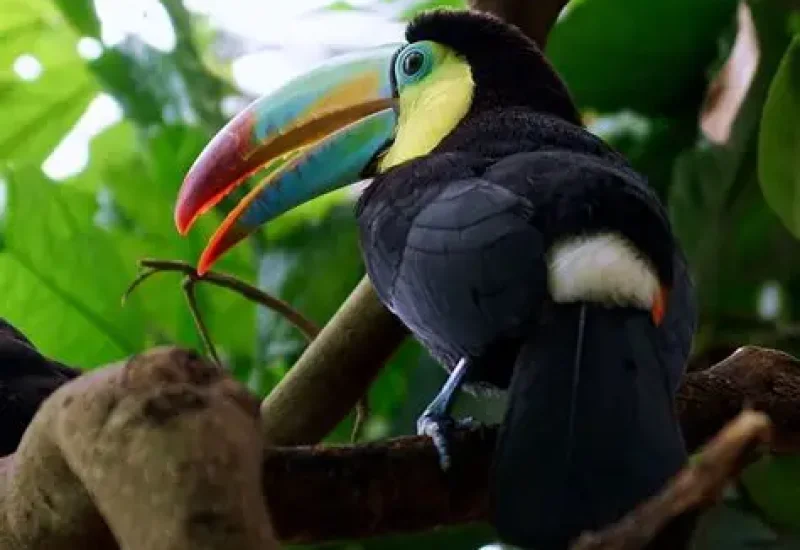
Away from the water, the wooded hills hold some of the species that make Hispaniola special. The island is home to a number of endemic birds, meaning species found nowhere else, and some of them are reported in and around Los Haitises.
- The Hispaniolan parrot and the Hispaniolan parakeet are noisy and often heard before they are seen, flying in pairs or small groups above the canopy.
- The Hispaniolan woodpecker is a medium-sized, colorful woodpecker that is common in many forested areas of the island.
- The palmchat, the national bird of the Dominican Republic, builds large communal stick nests in palm trees and is widespread across the island.
- The broad-billed tody is a tiny, bright green bird with a red throat that perches quietly on low branches and is easy to overlook.
Sightings of these species depend heavily on how much time you spend in forest and how quiet the group is. On a brief boat-based visit, you are more likely to hear them than see them.
A rare raptor worth knowing about
Los Haitises is also known among conservationists as one of the few places where Ridgway’s hawk survives. This is a critically endangered bird of prey that is found only on Hispaniola, and its remaining population is very small. It is a forest raptor that is secretive and hard to spot, and ordinary visitors should not expect to see one.
It is mentioned here because it gives context to why the park matters. Protected forest of this kind is not only a pleasant backdrop for a day trip: it is habitat for species that have very few places left to live. Respecting park rules, keeping noise down and not disturbing nests all contribute to keeping it that way.
When to look: time of day, tides and season
Birds are generally most active in the early morning and late afternoon, when temperatures are lower and feeding is at its peak. Midday tends to be quieter, as many birds rest in the shade, although seabirds such as pelicans and frigatebirds can still be seen at any hour.
Tides matter for wading birds. At low tide, more mud and shallow water are exposed, and herons and egrets often gather to feed. At high tide, they may be harder to see among the roots. Local guides usually know how the tide affects a given spot on the day.
Season plays a role as well. From roughly autumn to spring, migratory birds from North America arrive in the Caribbean, which can add species to the list, particularly among waders and shorebirds. Breeding seasons for resident birds vary by species, so it is difficult to give a single “best month.” As a general rule, the drier months also tend to offer more comfortable conditions for outings.
How to watch birds without disturbing them
A few simple habits make observation more rewarding and reduce stress on the animals:
- Keep your distance. Approaching nesting colonies too closely can cause adults to leave, exposing eggs and chicks.
- Stay quiet. Birds respond to loud voices long before they respond to people.
- Do not feed wildlife. Feeding changes natural behavior and can make birds dependent on people.
- Use binoculars rather than getting closer. Even a small pair makes a large difference, particularly for forest species.
- Follow the guide’s instructions. On boats, guides know which areas are sensitive and how close the boat can go.
Photography is welcome in most places, but a long lens is better than moving closer, and flash is best avoided.
What kind of excursion suits birdwatching
Los Haitises can be visited in several ways, and each gives a different experience. A general boat tour of the bay offers good chances of seeing seabirds and some waders, but the stops are usually timed for caves and scenery rather than for birds. A dedicated birdwatching trip with a specialist guide, often starting early in the morning, offers far better chances for forest species and endemics, but it requires more time and a more patient approach.
For most travelers, the realistic goal on a day trip is to see the common, visible species well rather than to complete a species list. That alone makes the visit memorable, and it keeps expectations in line with what a group excursion can offer.
What Quetzal Excursions says about its Los Haitises excursion
Quetzal Excursions lists a full-day excursion to Los Haitises and Caño Hondo. According to its official page, the day includes the natural pools of Caño Hondo, a boat ride through the mangroves, and visits to two caves, Cueva de la Arena and Cueva del Ferrocarril. Pickups are arranged from Punta Cana, at around 6:30, and from Bayahibe, at around 7:30, and groups are small, with a maximum of fourteen participants. The guide is bilingual in French and Spanish, and the page notes that December to April is the recommended period.
The official page does not describe birdwatching as a feature of the excursion, and it does not list bird species or specific observation stops. Since the route goes through the mangroves and across the bay, it is reasonable to expect to see common coastal birds such as pelicans and frigatebirds along the way, but this excursion is built around the caves, the pools and the landscape rather than around birds. Anyone with a particular interest in birds should ask about this directly when booking, and bring binoculars. Schedules and conditions can change, so it is worth checking the current details.
Final Thoughts
Los Haitises offers a good introduction to Caribbean birdlife, with brown pelicans and magnificent frigatebirds over the bay, herons and egrets in the mangroves, and parrots and other Hispaniolan specialties in the forest. A rare raptor such as Ridgway’s hawk survives in the region, although it is not something to count on seeing.
Early morning, a low tide and a quiet, patient group improve your chances, while a good pair of binoculars improves the quality of what you do see. Even on a general excursion, paying attention to the sky and the mangrove edges usually pays off, and the birds are a reminder that this protected landscape is far more than just a backdrop for photographs.

Who are we?
Based in Bayahibe, Quetzal Excursions is a local agency specialized in small-group sea trips to Saona, Catalina, and the most beautiful hidden gems of the Dominican Republic. We focus on comfort, safety, and authenticity, aboard high-end boats with a professional crew.
📱 CONTACT US ON WHATSAPP : +1 (809) 979-7359

Our Regular Excursions
Saona by Catamaran – All Comfort
Our Excursion to Catalina Island
Snorkeling Tour to Catalina
Our Private Excursions
Private rental of the Quetzal catamaran
📌 Need help planning your excursion?
Contact Quetzal Excursions to plan your activities from your place of stay, with included transport, small group, professional guide, and high-end services.