

What Is There to See in Los Haitises National Park From Bayahibe?
Los Haitises doesn’t come up nearly as often as Saona Island or Punta Cana’s beaches when people plan a trip to the Dominican Republic, but it’s arguably the most distinctive landscape the country has to offer: a maze of limestone karst hills rising straight out of mangrove-lined bays, riddled with caves that hold centuries-old indigenous drawings. It’s also, geographically, in a completely different part of the island from Bayahibe — which matters quite a bit for anyone trying to fit it into a trip based on the southeastern coast.
What Los Haitises actually is
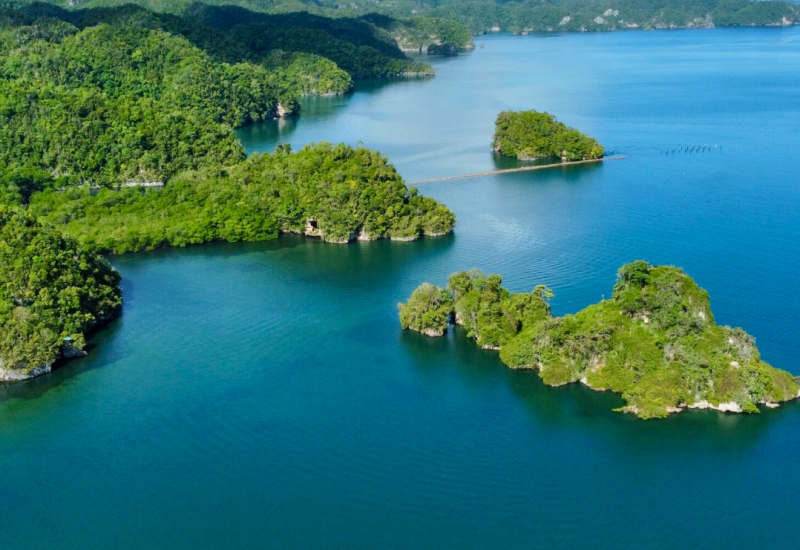
Los Haitises National Park sits on the southern edge of Samaná Bay, in the northeastern Dominican Republic, and is the country’s largest nature reserve. Its name comes from the Taíno word for “highlands,” referring to the park’s signature mogotes — steep, forested limestone hills that rise abruptly from the water and the mangrove forest surrounding them, creating a landscape closer to what you’d expect from parts of Southeast Asia than the Caribbean. The park was officially protected starting in 1976.
Because the terrain is so rugged, there’s very little road access into the park itself. Nearly all visits happen by boat, typically departing from Samaná town or the smaller port of Sabana de la Mar, on the opposite side of the bay.
What there is to see
- The mangrove channels. Boat tours wind through narrow channels where mangrove roots form dense, tangled walls at low tide, and where birdlife tends to concentrate in the overhanging branches.
- Bird Island and San Lorenzo Bay. Most boat routes pass islets favored by pelicans and other seabirds, before opening out into San Lorenzo Bay, where the karst hills and forest create some of the park’s most photographed views. Turtles, crustaceans and dolphins are occasionally spotted in these waters as well.
- The caves. Several caves within the park — Cueva de la Arena among the best known — were historically used as shelter, first by the Taíno and later reportedly by pirates. Some contain petroglyphs and pictographs believed to be at least 500 years old, still visible on the cave walls today.
- Wildlife and birdwatching. The park is considered one of the country’s best birdwatching sites, with brown pelicans, magnificent frigatebirds, and the Stygian owl among the more notable species recorded there.
How people actually get there — and why it matters from Bayahibe
Most Los Haitises tours are organized from the Samaná Peninsula, on the opposite end of the island from Bayahibe. The driving distance between the two is significant: roughly 270 km, translating to close to 4 hours each way by car, or considerably longer by public bus. Multi-stop tours run out of Bayahibe do exist, but they’re built as full expeditions rather than a simple morning outing — commonly departing before 6am, driving through Higüey, El Seibo and Hato Mayor to reach Sabana de la Mar, taking the boat into the park, and in some cases continuing on to the Samaná Peninsula itself to visit the Salto Limón waterfall before heading back. A day like that can easily run 14 to 15 hours door to door.
That’s a meaningfully different commitment from a trip to Saona Island or Catalina, both of which sit a short boat ride from Bayahibe itself, or an inland buggy excursion through the surrounding countryside, which stays within an hour or two of the coast. Los Haitises isn’t a bad add-on to a Bayahibe-based trip — it’s simply a separate, full expedition-style day rather than a quick detour, and worth planning as its own outing rather than squeezing in alongside other activities during the same stay.
Tour formats and what to expect
Once on-site, Los Haitises tours generally fall into a few formats: shorter boat-only excursions from Samaná or Sabana de la Mar focused on the mangroves and one or two caves (roughly 2 to 4 hours), combined trips that pair the park with the Samaná Peninsula’s Salto Limón waterfall or Cayo Levantado island, and kayaking-focused tours for those who want to paddle through the mangrove channels rather than ride in a motorboat the whole way. Entrance fees, a guide and life jackets are typically included in organized tours; lunch and alcoholic drinks usually aren’t, and it’s worth bringing sunscreen, a hat and water, since amenities inside the park itself are minimal.
When to go
Los Haitises can be visited year-round, though the boat routes through the mangroves are more comfortable outside of the rainiest months, and travelers combining the park with a Samaná Peninsula stop sometimes time the trip for whale-watching season (roughly January to March), when humpback whales are present in Samaná Bay along the same general route.
Final Thoughts
Los Haitises rewards the extra distance with something genuinely different from the rest of the southeastern coast: karst hills instead of beaches, mangrove channels instead of open water, and caves holding art that predates the arrival of Europeans by centuries. It just requires treating the day differently — as a dedicated expedition rather than a quick excursion.
For travelers based around Bayahibe, that distinction is a useful way to think about the region as a whole: some experiences, like the catamaran trips to Saona and Catalina or the buggy tours through the sugar cane country that operators like Quetzal Excursions run close to home, fit naturally into a single day without much travel involved. Others, like Los Haitises, sit on the opposite side of the island and call for a longer, dedicated day of their own — a distinction worth keeping in mind when mapping out which excursions to fit into a Bayahibe-based stay.

Who are we?
Based in Bayahibe, Quetzal Excursions is a local agency specialized in small-group sea trips to Saona, Catalina, and the most beautiful hidden gems of the Dominican Republic. We focus on comfort, safety, and authenticity, aboard high-end boats with a professional crew.
📱 CONTACT US ON WHATSAPP : +1 (809) 979-7359

Our Regular Excursions
Saona by Catamaran – All Comfort
Our Excursion to Catalina Island
Snorkeling Tour to Catalina
Our Private Excursions
Private rental of the Quetzal catamaran
📌 Need help planning your excursion?
Contact Quetzal Excursions to plan your activities from your place of stay, with included transport, small group, professional guide, and high-end services.
One Response