

Meet The Quetzal: The Solar-Powered Catamaran Changing Saona Tours
Saona Island is one of the Dominican Republic’s most iconic destinations. Located off the southeastern coast, the island is known for its white-sand beaches, turquoise waters, mangrove areas and rich marine environment. Every year, thousands of visitors travel from Bayahibe and other parts of the Dominican Republic to discover it by boat.
But getting to Saona is not only about the destination. The boat itself can influence the entire experience, from the way passengers move across the Caribbean Sea to the amount of noise, fuel and energy used along the way.
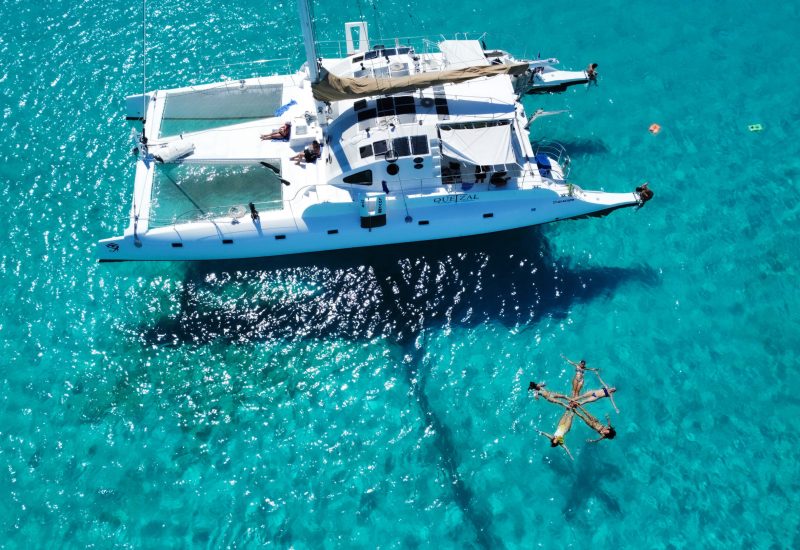
Among the different boats operating around Bayahibe, the Quetzal stands out for a particular reason: it is a catamaran designed with solar power as part of its energy system. This makes it an interesting example of how marine tourism can combine comfort, technology and a different approach to energy use.
So, what exactly makes the Quetzal different, and how does a solar-powered catamaran work?
A Different Way To Explore Saona Island
For many travelers, a trip to Saona starts in Bayahibe. The small coastal town is one of the main departure points for excursions to the island and is located close to the protected waters of the Parque Nacional Cotubanamá.
The journey between Bayahibe and Saona is already an important part of the experience. Rather than simply being transportation from one point to another, a boat trip offers the opportunity to observe the coastline, the Caribbean Sea and the surrounding marine environment.
This is where the design of the Quetzal becomes particularly interesting. As a catamaran, it has two hulls instead of one, creating a wide and stable platform on the water. This type of design is widely used for recreational and passenger boats because it can provide a different experience from traditional single-hull vessels.
The Quetzal combines this catamaran structure with solar technology, creating a boat that reflects some of the changes taking place in modern tourism.
What Is A Solar-Powered Catamaran?
A solar-powered boat uses photovoltaic panels to convert sunlight into electrical energy. In simple terms, the solar panels capture energy from the sun, which can then be used to power electrical systems on board.
The concept is particularly relevant in the Caribbean, where sunlight is abundant throughout much of the year.
However, a solar-powered boat does not necessarily mean that every part of the vessel is powered exclusively by the sun. Depending on the boat’s design, solar energy can support electrical equipment, navigation systems, lighting, batteries or other onboard systems.
The important difference is the integration of renewable energy into the boat’s overall energy system.
On the Quetzal, solar technology is therefore not simply an aesthetic feature. It is part of the vessel’s design and reflects an effort to incorporate renewable energy into an environment where traditional boats have historically relied heavily on conventional fuel.
Why Solar Energy Makes Sense At Sea
The ocean and sunlight naturally create an interesting environment for solar technology. Boats spend long periods exposed directly to the sun, particularly in tropical destinations such as the Dominican Republic.
Unlike a building, a boat is constantly moving and does not need to remain connected to an electrical grid while operating. Solar panels can therefore provide an additional source of energy while the vessel is at sea or waiting at the dock.
There are also practical advantages to producing electricity directly on board. Solar energy can reduce the amount of electricity that needs to come from other sources for certain onboard systems.
Of course, solar technology has limitations. Weather conditions, available surface area and energy consumption all affect how much electricity can be produced. Solar panels alone cannot automatically make a large passenger boat completely independent from other energy sources.
Instead, the interesting aspect is the combination of technologies and the possibility of reducing dependence on conventional energy where possible.
The Catamaran Design: Stability And Space
Another defining characteristic of the Quetzal is its catamaran configuration.
A catamaran has two parallel hulls connected by a central structure. Compared with a conventional single-hull boat, this creates a wider footprint on the water.
One of the main consequences is stability. The two hulls distribute the boat’s weight across a wider area, which can contribute to a more stable feeling for passengers.
The design also creates more usable space above the water. For an excursion boat, this can be particularly useful because passengers can move around, sit together and enjoy the surroundings without being confined to a narrow deck.
This makes the catamaran format especially suited to day trips where the journey itself is part of the experience.
For a destination such as Saona, where visitors often spend several hours on the water, the boat becomes more than a simple means of transportation. Its layout can influence how passengers experience the entire excursion.
Saona Island And Its Protected Environment
Understanding the Quetzal also means understanding the environment in which it operates.
Saona Island is part of the Parque Nacional Cotubanamá, one of the protected natural areas of the Dominican Republic. The region includes beaches, coastal ecosystems, mangroves, coral reefs and marine habitats.
The surrounding waters are home to a variety of marine species, while the island itself is known for its tropical landscapes and relatively undeveloped coastline.
Tourism is an important part of the region’s economy, but the popularity of Saona also raises questions about how increasing numbers of visitors can coexist with a sensitive natural environment.
There is no single solution to this challenge. Responsible tourism involves many factors, including waste management, wildlife protection, visitor behavior, boat operations and the way natural resources are used.
Technology such as solar power can be one part of a broader conversation about how tourism infrastructure can evolve.
What Makes The Quetzal Different?
The Quetzal is interesting because several characteristics come together in one vessel.
First, its catamaran structure provides a wide platform designed for day trips. Second, the boat incorporates solar technology, introducing renewable energy into its onboard systems. Finally, its location in the Dominican Republic places it directly within one of the Caribbean’s most popular marine tourism destinations.
This combination makes the Quetzal more than simply another excursion boat.
It can also be viewed as an example of how tourism operators can experiment with different technologies and designs while continuing to offer access to natural destinations.
The concept is especially relevant as travelers become increasingly interested in understanding the environmental impact of the activities they participate in.
Solar Power And The Future Of Marine Tourism
The use of solar energy in boats is part of a wider movement toward more efficient and alternative propulsion technologies.
Around the world, marine manufacturers, researchers and tourism operators are experimenting with electric motors, hybrid propulsion systems, improved batteries and renewable energy.
Small and medium-sized vessels are particularly interesting for this type of innovation because their energy requirements can be easier to manage than those of large commercial ships.
In tropical destinations, solar power can also be attractive because of the high availability of sunlight.
The challenge is finding the right balance between energy production, battery storage, propulsion requirements, passenger capacity and operational needs.
The Quetzal offers a practical example of this transition at a tourism destination where the relationship between boats and the natural environment is particularly visible.
A Boat Can Be Part Of The Experience
When people think about visiting Saona, they usually picture the beach first.
They imagine white sand, clear water, palm trees and the Caribbean landscape. But reaching the island is also part of the journey.
A boat can influence the atmosphere of the day, the amount of time spent comfortably on the water and the way passengers interact with their surroundings.
A catamaran such as the Quetzal offers a different perspective on that journey. Its open design allows passengers to experience the sea rather than simply passing through it.
The addition of solar technology adds another dimension: the boat itself becomes an example of how modern tourism can incorporate renewable energy into traditional activities.
Technology, Tourism And The Caribbean
The development of vessels such as the Quetzal raises a broader question about the future of tourism in destinations like the Dominican Republic.
The Caribbean depends heavily on tourism, and many of its most attractive destinations are also environmentally sensitive. Beaches, coral reefs, mangroves and marine ecosystems are central to the region’s appeal.
As tourism continues to grow, the industry will increasingly need to consider how transportation, accommodation and excursions can operate while limiting unnecessary environmental pressure.
Solar-powered technology is not a complete answer, and it does not automatically make an excursion environmentally neutral. However, it demonstrates that there are opportunities to rethink how tourism equipment is designed and powered.
The Quetzal represents one example of this evolution on the waters around Bayahibe and Saona.
Final Thoughts
The Quetzal offers an interesting example of how innovation can find its place in one of the Caribbean’s most traditional activities: exploring the sea by boat. By combining the stability and open space of a catamaran with solar-powered technology, it reflects a growing interest in making marine tourism more thoughtful and efficient.
Its story also highlights an important point: experiencing destinations such as Saona Island is not only about where we go, but also about how we get there. As technology continues to evolve, boats like the Quetzal show that comfort, exploration and new approaches to energy can exist together on the same journey.
For anyone interested in the future of marine tourism, the Quetzal is therefore worth looking at not simply as a means of reaching Saona, but as an example of how the boats carrying travelers across the Caribbean could continue to evolve.

Who are we?
Based in Bayahibe, Quetzal Excursions is a local agency specialized in small-group sea trips to Saona, Catalina, and the most beautiful hidden gems of the Dominican Republic. We focus on comfort, safety, and authenticity, aboard high-end boats with a professional crew.
📱 CONTACT US ON WHATSAPP : +1 (809) 979-7359
Our Regular Excursions
Saona by Catamaran – All Comfort
Our Excursion to Catalina Island
Snorkeling Tour to Catalina
Our Private Excursions
Private rental of the Quetzal catamaran
📌 Need help planning your excursion?
Contact Quetzal Excursions to plan your activities from your place of stay, with included transport, small group, professional guide, and high-end services.